 By admin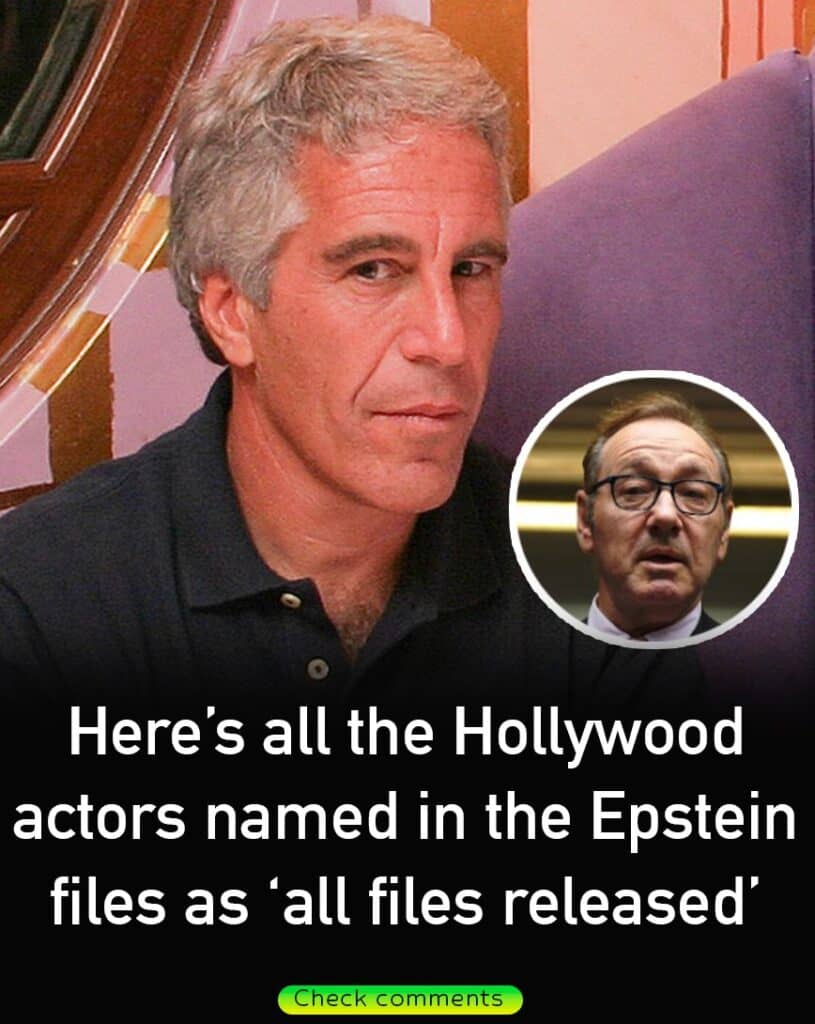
Understanding Hollywood’s Connection to the Epstein Case: Facts, Context, and Responsibility
The long-running fallout surrounding Jeffrey Epstein continues to shape public discussion across politics, business, and the entertainment industry.
Years after his death in federal custody in 2019, unsealed court documents, civil filings, and investigative reporting have kept his social network under scrutiny. As new materials periodically become public, renewed attention often turns toward recognizable names — especially in Hollywood.
Yet legal authorities and independent experts consistently emphasize one central truth:
Appearing in Epstein-related records does not, by itself, indicate wrongdoing.
Understanding this distinction remains essential in a case that is emotionally charged, morally serious, and often misunderstood.
A Brief History of the Case
Epstein’s criminal conduct first gained national attention in 2008 following a controversial plea deal in Florida. More than a decade later, he was arrested again on federal sex trafficking charges in 2019.
He died before standing trial.
In 2021, his longtime associate Ghislaine Maxwell was convicted for her role in recruiting and grooming underage girls and later sentenced to 20 years in prison.
Her trial and related civil lawsuits resulted in thousands of documents entering the public record, many of which have since been unsealed.
These releases continue to fuel public curiosity.
What the “Epstein Files” Actually Contain
The so-called “Epstein files” are not an official list of guilty individuals. They are a collection of legal materials, including:
-
Civil court filings
-
Deposition transcripts
-
Emails and correspondence
-
Contact books and address lists
-
Flight logs
-
Internal communications
Because Epstein cultivated relationships with politicians, entertainers, academics, and philanthropists, his records contain hundreds of peripheral references.
In many cases, a name appears simply because:
-
Someone attended a public event
-
Was listed in a contact book
-
Was mentioned by a third party
-
Appeared in a photograph
-
Shared a flight
None of these, on their own, establish criminal knowledge or involvement.
Federal prosecutors have repeatedly stated that only Epstein and Maxwell were charged in connection with the trafficking crimes proven in court.
Hollywood and Public Scrutiny
The entertainment industry has faced its own reckoning in recent decades.
The conviction of Harvey Weinstein reshaped industry norms.
The unresolved case of Roman Polanski continues to raise accountability questions.
The tragic on-set shooting involving Alec Baldwin renewed discussions about responsibility.
Against this backdrop, any link — even indirect — between Hollywood figures and Epstein draws intense attention.
Celebrity visibility often magnifies speculation beyond what evidence supports.
Notable Figures Mentioned in Records
Several entertainment figures have appeared in Epstein-related reporting. In each case, courts have emphasized the need for context.
Kevin Spacey
Photographs from the early 2000s show Kevin Spacey with Maxwell and Bill Clinton.
Spacey has not been charged in connection with Epstein and was acquitted in the UK in 2023 of unrelated allegations. He has publicly supported full transparency.
Woody Allen
Filmmaker Woody Allen has acknowledged attending a dinner that included Epstein, along with his wife Soon-Yi Previn.
He has stated he had minimal contact and no knowledge of criminal activity. No charges have been filed.
Casey Wasserman
Entertainment executive Casey Wasserman appeared in early-2000s emails with Maxwell. He has expressed regret over their tone and has not been accused of wrongdoing.
Other Figures Mentioned
Various other public figures have appeared in documents or reporting, including:
-
Robert De Niro
-
Amy Schumer
-
Chris Tucker
-
Alyssa Milano
-
Whoopi Goldberg
-
Minnie Driver
In nearly all cases, references involve social settings, contact lists, or indirect mentions. None have resulted in criminal convictions related to Epstein.
Why Names Appear in Large Investigations
In cases involving wealthy, socially connected individuals, wide networks are unavoidable.
Names may appear because someone:
-
Attended a fundraiser
-
Shared professional contacts
-
Was mentioned by a witness
-
Appeared in archived photos
-
Was copied on an email
Large investigations often document entire social ecosystems — not just perpetrators.
This is why courts distinguish between proximity and culpability.
Media, Public Curiosity, and Responsibility
The Epstein case sits at the intersection of power, wealth, celebrity, and abuse — a combination that naturally draws attention.
But responsible reporting requires clear separation between:
-
Proven criminal conduct
-
Allegations under review
-
Social associations
-
Unsupported speculation
Legal systems operate on evidence, not impressions.
As of today, only Epstein and Maxwell have been convicted in connection with his trafficking operation.
Broader Cultural Impact
The release of records has sparked wider conversations about:
-
Elite accountability
-
Institutional transparency
-
Victim advocacy
-
Power imbalances
Advocacy groups continue to call for full disclosure. Others warn against selective interpretation that damages innocent lives.
In the digital age, decades-old emails and photos can reappear instantly — often without context.
Wisdom lies in restraint.
A Legal and Moral Reminder
Federal authorities have consistently emphasized:
Inclusion in Epstein-related documents is not proof of criminal involvement.
Due process remains the foundation of justice. Individuals are presumed innocent unless proven guilty in court.
While society must remain vigilant against abuse, it must also resist replacing justice with rumor.
Conclusion: Truth Requires Patience
Public interest in Epstein’s network reflects legitimate concern about power and accountability.
The entertainment industry, because of its visibility, becomes part of that conversation whenever recognizable names appear.
Yet the legal record remains clear:
Epstein and Maxwell were convicted.
Others have been referenced.
No sweeping criminal cases against Hollywood figures have emerged.
As more records are reviewed, one principle must guide understanding:
Association is not culpability.
Mention is not proof.
Evidence matters.
In an age where headlines travel faster than facts, integrity lies in careful judgment, humility, and commitment to truth.
Only through that lens can justice — for victims and the innocent alike — be honored.