 By admin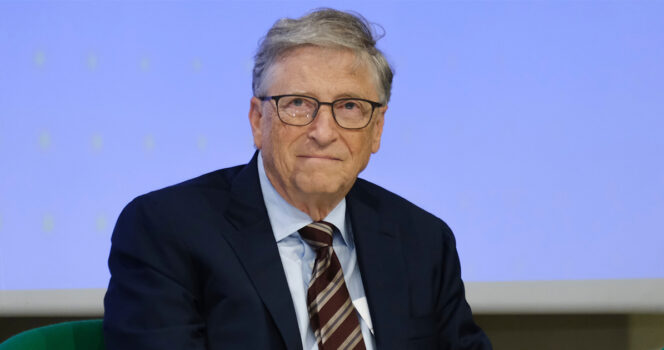
As machines become “superior to humans,” Bill Gates warns that artificial intelligence (AI) could replace people “for most things,” rapidly reshaping the workforce. Entire careers may disappear, others will transform beyond recognition, and only a small number may truly survive.
It’s a warning the Microsoft co-founder has been repeating with increasing urgency – and one he says is already beginning to take shape.
Speaking on The Tonight Show with Jimmy Fallon, Gates, 70, pointed out that what we currently consider valuable human expertise – whether it’s a “great doctor” or a “great teacher” – still matters because it’s “rare.”
But “with AI, over the next decade, that will become free, commonplace – great medical advice, great tutoring,” he told Fallon.
In other words, if AI replaces humans “for most things,” the very idea of expertise could shift into something widely available, instantly accessible, and no longer tied to a single human professional.
The rise of ‘free intelligence’
Gates has described this shift as the arrival of “free intelligence,” a phrase that captures both the promise and the uncertainty of what’s ahead.
In a conversation with Harvard professor Arthur Brooks, he didn’t sugarcoat the speed or scale of what’s coming.
“It’s very profound and even a little bit scary – because it’s happening very quickly, and there is no upper bound,” Gates told Brooks.
What that means in practice is a world where AI doesn’t just assist with tasks but becomes deeply embedded in how problems are solved, decisions are made, and services are delivered.
Eventually, “the machine will probably be superior to humans – because the breadth of knowledge that you need to make some of these decisions really goes beyond individual human cognition,” the billionaire philanthropist said.
So, if machines can do most things, where does that leave human workers?
Jobs already standing on shaky ground
Some early answers are beginning to emerge – and they don’t necessarily match what people expected.
Instead of manual labor being hit first, many of the roles most exposed to AI are found in offices, behind screens, and in industries long considered stable.
According to a Microsoft study released in December 2025, these are the positions most at risk:
- Technical writers
- Ticket agents and travel clerks
- Editors
- Telemarketers
- Broadcast announcers and radio DJs
- Mathematicians
- Political scientists
- Interpreters and translators
- Advertising sales agents
- CNC tool programmers
- News analysts, reporters, and journalists
- Customer service representatives
- Historians
- Farm and home management educators
- Business teachers, postsecondary
- Hosts and hostesses
- Public relations specialists
- Concierges
- Brokerage clerks
- Proofreaders and copy markers
- Writers and authors
- Sales representatives (services)
- Telephone operators
- Demonstrators and product promoters
- Passenger attendants
- Data scientists
- Market research analysts
- Web developers
- Management analysts
What connects these roles isn’t the industry – it’s the nature of the work. Much of it involves processing information, recognizing patterns, or communicating in predictable ways, all areas where AI is improving at a remarkable pace.
Pseudo-safe roles
At the same time, jobs that rely on physical presence or hands-on skills appear, at least for now, to be more insulated. Roles like cooks, mechanics, bartenders, and lifeguards remain difficult for AI to replicate, largely because they require adaptability in real-world environments.
Still, even these safer categories exist within a moving target, as technology continues to evolve in ways that are hard to predict.
Three areas Gates believes will survive
Despite the sweeping nature of his warning, Gates doesn’t believe everything will be handed over to machines.
Among the fields he believes will remain essential are:
- Biology, where discovery and experimentation still depend heavily on human insight.
- Energy, particularly as the world navigates complex systems and sustainability challenges.
- Programming and software development, even as AI becomes a tool within the field.
And then there are the things that go beyond necessity – things people simply want to remain human.
“You know, like baseball. We won’t want to watch computers play baseball,” Gates told Fallon. “There will be some things we reserve for ourselves. But in terms of making things and moving things and growing food, over time those will be basically solved problems,” Gates said.
The idea that intelligence itself could become widely accessible challenges long-held assumptions about work, value, and what it means to be needed. The question now isn’t whether change is coming – but how ready we are when it does.
Are we heading toward progress – or a problem we can’t reverse? Share your opinion in the comments and pass this story along to see where others stand.