 By admin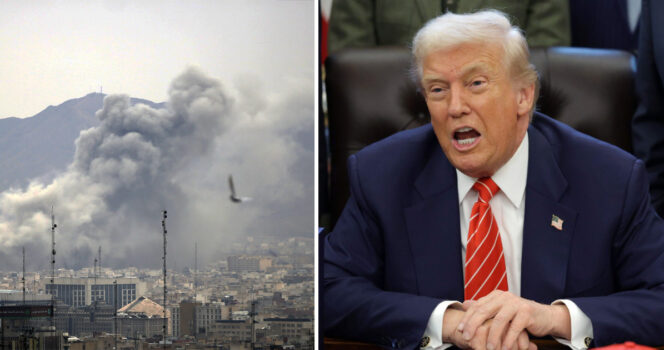
Donald Trump has struggled to gain support for “Operation Epic Fury,” his latest move against Iran. After calling on allies to join, the response has been largely unenthusiastic.
Many countries have declined or responded with caution, fueling concern about how far the conflict could escalate. In Europe, several major countries have made their positions clear.
The United Kingdom, traditionally one of the US’s closest allies, has ruled out participating in any further military action tied to the operation.
“Britain won’t be drawn into the wider war,” Prime Minister Keir Starmer emphasized, though he did signal a willingness to help work toward a “viable plan.” He also shut down any speculation about NATO stepping in, according to VT, saying: “Let me be clear: that won’t be, and it’s never been envisioned to be, a NATO mission.”
Multiple countries in Europe refuse to join war against Iran
Italy’s Foreign Minister, Antonio Tajani, also said military involvement is not on the table.
Germany has also made clear it will not participate in the conflict: “There was never a joint decision on whether to intervene. That is why the question of how Germany might contribute militarily does not arise. We will not do so,” Chancellor Friedrich Merz said.
At the same time, he added that while the Iranian regime “must end,” “bombing it into submission is, in all likelihood, not the right approach.”
Germany’s defence minister, Boris Pistorius, also questioned the US strategy, and Trump himself, saying: “This is not our war, we have not started it. What does Donald Trump expect from a handful of European frigates in the strait of Hormuz that the mighty US navy cannot manage alone? This is the question I find myself asking.”
Elsewhere in Europe, countries including the Netherlands, Lithuania, and Estonia have expressed uncertainty, raising questions about the purpose and ultimate goal of operations in the Strait of Hormuz. A Greek government spokesperson confirmed the country will not take part in any military operations related to the mission.
Australia, South Korea, Japan
Outside Europe, the pattern continues. Australia, South Korea, and Japan have each said they do not plan to participate at this time. Australia’s transport minister, Catherine King, put it plainly: “We won’t be sending a ship to the strait of Hormuz, We know how incredibly important that is but that’s not something we’ve been asked or we’re contributing to.”
South Korea has kept things more open-ended, saying it will “continue to communicate” with the US.
China’s role remains unclear. While no commitment has been made, U.S. Energy Secretary Chris Wright said he expects China to act as a “constructive partner” in the region.
Trump himself has also pointed to China’s role in the situation, saying: “I think China should help, too, because China gets 90% of its oil from the straits.”
Ukraine has offered support
Amid the hesitation, there has been one notable, and somewhat unexpected, response. Ukraine, despite being in the middle of its own ongoing war with Russia, has indicated a willingness to assist. President Zelenskyy has reportedly offered support in countering drone threats from Iran.
“We reacted immediately,” he said. “Whenever it is possible for us to help defending civilians or US nationals, without second thought we sent our teams.”
The overall hesitation appears to have frustrated Trump, who suggested allies’ responses are being closely noted: “Whether we get support or not, but I can say this, and I said to them: We will remember.”
Whether more countries step in remains uncertain.