 By admin
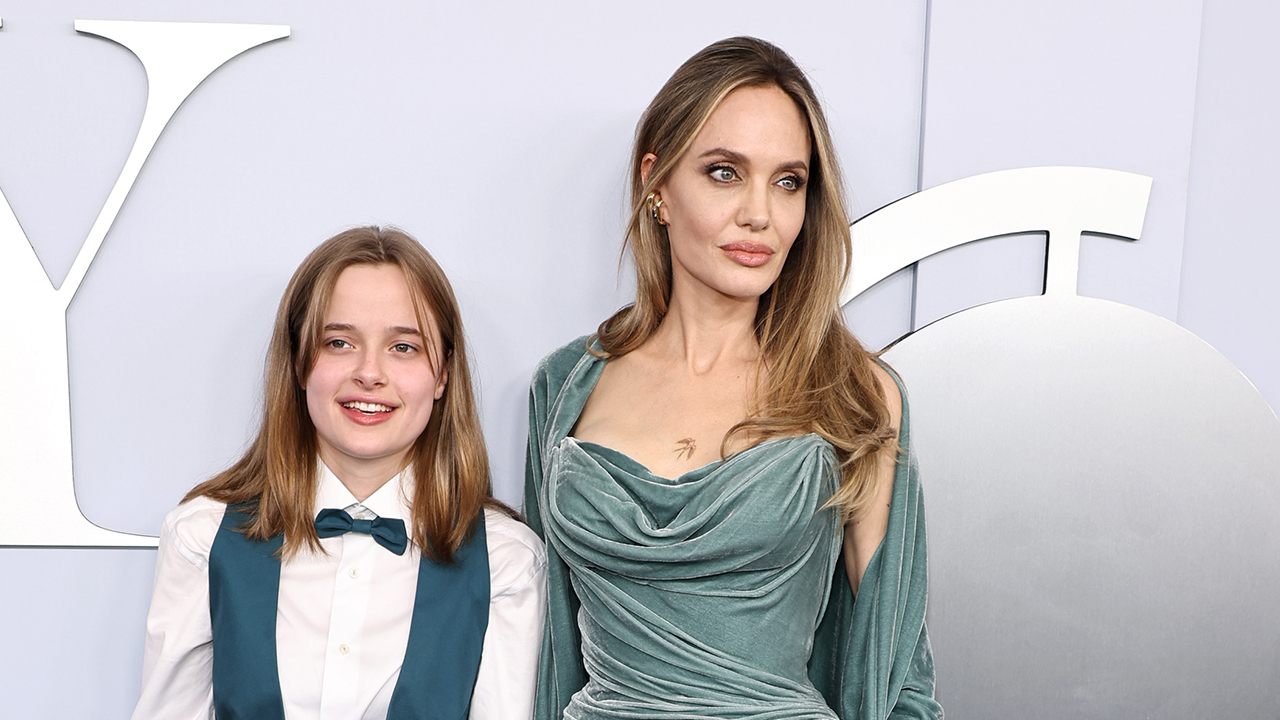
Angelina Jolie and Brad Pitt’s daughter Vivienne has shared a deeply personal experience, revealing that she was hospitalized earlier this year while dealing with an eating disorder.
The 18-year-old’s difficult journey became the inspiration behind a collection of paintings, offering a rare look into a challenging chapter of her life.
Vivienne Jolie discussed her experience in a written statement displayed alongside her artwork at The Tulip Field: A Gallery on Patience of Patients. The exhibition took place at Forager Crafts in Los Angeles in early November.
In her statement, Vivienne spoke openly about her mental health difficulties and the eating disorder she had been facing.
“Like many, I have struggled with mental health. I have also struggled with an eating disorder,” she wrote, according to Page Six.
She also revealed that she had received hospital treatment earlier in the year.
“At the beginning of this year, I was hospitalized for my ED. I was angry, sick, and very alone.”
Although the experience was difficult, Vivienne explained that the people she encountered during her stay eventually helped her feel less isolated.
She credited the other young patients and hospital employees with making a meaningful difference in her experience.
“Eventually, however, the kindness and warmth of the kids and staff at the hospital broke down the walls I had built so high,” she shared.
“I have never laughed or cried harder, never been more honest or more myself.”
‘The Worst and Best Time of My Life’
The connections Vivienne made during her hospitalization became central to the artwork she later presented to the public.
She named the exhibition The Tulip Field, using the hospital’s name as a way to preserve memories of the people and experiences that had influenced her.
“The other kids there taught me how to be strong when you are at your weakest,” she wrote.
“It was the worst and best time of my life and I am better for it.”
Because she couldn’t take photographs during her hospital stay, painting became a way for Vivienne to document those memories.
Her statement explained that the artwork represented moments that could not otherwise be captured.
“There are of course no photographs of our time at the Tulip Field so these are our memories, our purest memories, preserved,” she said.
One of the pieces was titled “Vitals.” It was accompanied by a journal entry dated May 14, in which Vivienne wrote about feeling guilty over the length of her hospital stay.
The paintings offered visitors a personal perspective on a period of her life that she had previously kept private.
Vivienne’s Decision to Drop Her Father’s Surname
The exhibition came shortly after another important personal development involving the teenager.
Earlier in November, a court approved Vivienne’s request to legally remove Pitt from her surname.
She had already been using the name Vivienne Jolie professionally while collaborating with her mother on the Broadway production of The Outsiders.
Angelina Jolie and Brad Pitt share six children. Their separation was announced in 2016, and their family has remained the subject of considerable public attention.
Vivienne’s twin brother is Knox.
Why Vivienne Decided to Share Her Story
Although she grew up in one of Hollywood’s most recognizable families, Vivienne has generally maintained a private life.
Her decision to discuss her hospitalization and mental health experience therefore offered an unusually personal glimpse into her world.
A source speaking to Page Six said that sharing the experience required considerable courage.
“It took a lot of strength and courage for Vivienne to open up about something so personal, but she’s so glad she did,” the source explained.
The source also described her hope that speaking publicly might help others who are facing similar difficulties.
“It wasn’t easy putting herself out there, but if sharing her story helps even one person feel less alone or gives them the courage to reach out and get the help they need, then it was worth it. That’s what matters most to her.”
Through her paintings and accompanying statement, Vivienne has chosen to turn a difficult personal chapter into an opportunity to connect with others.
Her exhibition is ultimately a reflection of the relationships, memories and support that helped shape her experience.