 By admin
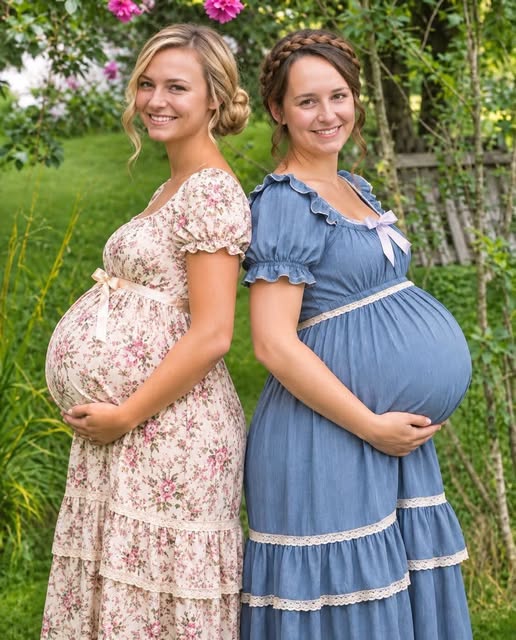
Two Best Friends Planned to Have Babies Together, But a DNA Test Revealed a Family Secret Nobody Expected
For two women who had shared nearly every important moment of their lives, becoming mothers together seemed like the perfect next chapter. They had grown up side by side, celebrated birthdays together, and supported each other through relationships, heartbreaks, and life’s biggest changes.
But when they decided to start families using the same sperm donor, neither imagined that their decision would uncover a secret that had remained hidden for decades.
Emily and her closest friend had known each other since childhood. Their friendship began when they were just seven years old, after Emily showed up at her friend’s front door with two chocolate cupcakes and confidently announced that they would become best friends.
She wasn’t wrong.
Over the years, the girls became practically inseparable. Their families were close, their childhood memories were intertwined, and their mothers often joked that the two were more like sisters than friends.
Adulthood eventually took them in different directions. One woman married in her twenties, only to experience a divorce several years later. Emily, meanwhile, went through several relationships before deciding she no longer wanted to postpone motherhood while waiting for the right partner.
The idea that changed everything came during an ordinary evening on a balcony.
A friendship turns into an unexpected family plan
While the two friends were talking, Emily raised a question that initially sounded like a joke.
Why should they wait for relationships to work out before having children?

Her suggestion was simple but unconventional: they could both become mothers using the same sperm donor, allowing their future children to have a biological connection.
After discussing the possibility at length, they decided to explore fertility treatment.
They researched clinics, attended appointments, reviewed donor information, and eventually selected a donor listed under the name Daniel. According to the profile, he was 35, had a good medical history, and was described as educated and healthy.
The friends felt comfortable with their choice and completed the necessary paperwork.
Their excitement grew even more when the pregnancies happened almost simultaneously.
One woman received her positive test first. Just three weeks later, Emily called with equally exciting news of her own.
They immediately began preparing for their babies, even purchasing matching pairs of yellow and green baby socks as a symbol of the family they hoped to create.
However, there were details they had overlooked.

Both women’s mothers had reacted strangely when they learned about the chosen donor. Margaret seemed particularly uncomfortable after hearing his name, while Emily’s mother, Helen, encouraged the friends to reconsider their decision.
At the time, the women assumed their mothers were simply being overly cautious.
They would soon discover that the reactions were connected to something much more serious.
A fertility appointment exposes an extraordinary discovery
Everything changed when the fertility clinic contacted the two women and requested an urgent meeting.
During the appointment, their doctor presented genetic reports showing an unexpected level of similarity between the developing babies.
Initially, Emily assumed there was nothing unusual about the results. Since both pregnancies involved the same donor, some genetic similarities were naturally expected.
But the doctor explained that the findings suggested something beyond what the shared donor could account for.
There was another possibility: the two women themselves might be biologically related.
The revelation was difficult to process. They had always believed they came from completely separate families.

The situation became even more concerning when the doctor explained that the genetic information from their pregnancies did not correspond with the donor records they had originally received.
Before they could fully understand what was happening, Emily received a phone call from her mother.
Helen sounded frightened. After learning that the clinic had discovered something unusual, she asked the women to leave immediately.
Then she mentioned a name that neither friend expected to hear.
Daniel.
According to Helen, the name was connected to events that the family had believed were buried in the past.
The secret their mothers had kept for decades
The situation took another unexpected turn when clinic staff informed the women that a man downstairs was claiming to be their biological father.
His name was Daniel.

Both women had grown up believing their fathers had died when they were children. Hearing that someone claiming to be their father was waiting nearby left them struggling to understand what was happening.
Around the same time, one of the women received an unfamiliar message containing an old photograph.
The picture showed their mothers in a hospital maternity ward, holding newborn babies. Another woman stood beside them.
Her appearance was remarkably similar to theirs.
After contacting Margaret, the woman finally learned the truth.
The woman in the photograph was Rebecca, their biological mother. She had died approximately 25 years earlier, and Margaret had helped raise one of the girls after her death.
Emily’s conversation with Helen revealed the same devastating reality.
The two lifelong friends were not simply close companions who had decided to give their children a shared biological connection.
They were sisters.
Both had been separated from their biological mother after her death and raised by the women they had always considered their mothers.
Their adoptive families had kept the truth hidden, believing that doing so would protect them from their biological father, Daniel Whitmore.
According to the account, Daniel had been involved in a troubled relationship with Rebecca. After a serious confrontation surrounding her attempt to leave with the children, he disappeared.
His vehicle was later discovered near a flooded river, and authorities believed he had died, although his body was never recovered.
The family had lived with that assumption for years.
But Rebecca had reportedly received threatening correspondence before her death, suggesting that Daniel’s disappearance might not have ended the family’s troubles.
An even more serious discovery about the pregnancies
Just when the women thought they had learned the worst of the truth, another investigation uncovered a disturbing explanation for the fertility clinic’s records.
The sperm samples used during their treatment had reportedly been incorrectly identified.
Instead of coming from the donor they had selected, the samples were allegedly linked to their biological father, Daniel Whitmore.
According to the story, his samples had been incorrectly filed under another donor’s profile years earlier.
This meant the two pregnancies had resulted from an error involving their own biological father.
The discovery raised serious concerns about the clinic’s procedures and the potential genetic implications for both babies.
The women were left facing medical uncertainty, difficult family conversations, and questions about how such an error could have happened.
Their relationship with Margaret and Helen also became strained as they struggled to understand why so much had been hidden from them.
Eventually, the families began confronting the past together.
Two babies bring a new beginning
The months that followed were filled with medical appointments, emotional conversations, and attempts to make sense of a situation neither woman had ever imagined experiencing.
Eventually, Emily welcomed a daughter named Lily.
Three weeks later, her best friend gave birth to a son named Noah.
Their arrival brought a different perspective to everything that had happened.
The two women were no longer simply childhood friends preparing to raise children together. They were sisters who had discovered their shared history under extraordinary circumstances.
Today, the image of Lily and Noah resting beside each other represents something neither woman could have predicted when they first discussed motherhood on that balcony.
The matching baby socks they purchased at the beginning of their journey have become a reminder of how dramatically their plans changed.
Their mothers’ decisions may have been motivated by fear, but the two women eventually decided that their children would grow up knowing the truth about their family.
For them, the most important part of the experience is no longer the unusual circumstances surrounding their pregnancies.
It is the relationship they have recovered and the opportunity to build a family without the secrets that shaped their childhoods.
What began as a plan between two inseparable friends ultimately revealed a family connection that had existed all along.
What would you do if a DNA test suddenly revealed that your closest childhood friend was actually your sibling? Share your thoughts in the comments.