 By admin
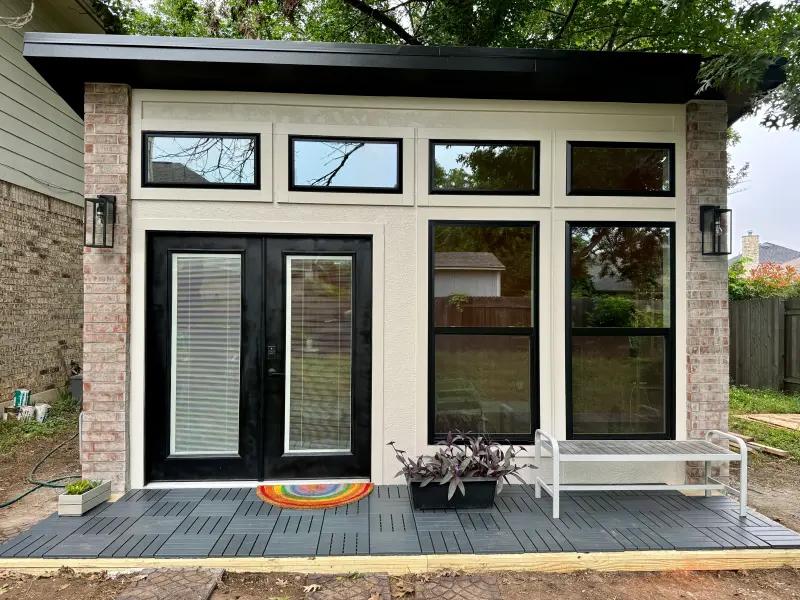
A Tiny Backyard Office Triggered a Six-Year Legal Battle. Now the HOA Faces a $153,000 Bill
What was supposed to be a simple backyard improvement turned into a costly legal dispute that lasted six years. Now, a Texas homeowners association is facing a financial judgment exceeding $153,000 after repeatedly losing its fight against one homeowner.
The dispute began in 2020, when Masha Davis sought approval to build a small detached office behind her property in the Davis Spring subdivision in Austin, Texas.
The proposed building measured just 160 square feet, roughly the size of a small bedroom. It was designed as a private workspace, complete with electricity and air conditioning but without plumbing.

Davis also had another reason for wanting the extra space. During the COVID-19 pandemic, she believed it could provide family members with a separate area when isolation was necessary.
However, the neighborhood’s homeowners association (HOA) refused to approve the plans. Its architectural committee argued that the building exceeded permitted height requirements and could potentially be converted into a separate living space, conflicting with the community’s single-family housing rules.
Davis challenged that interpretation, maintaining that the architectural guidelines applicable to her application did not contain the height restriction cited by the committee.

With no agreement reached, the disagreement moved from neighborhood meetings to the courtroom.
Davis filed a lawsuit in January 2021. In August 2022, a Williamson County district court ruled that the relevant architectural guidelines did not prohibit the proposed building on height grounds. The court also found that the committee did not have the authority to reject the application for that reason.
A further ruling in January 2024 established that the property’s restrictive covenants did not prohibit the construction either.
The legal outcome favored Davis, but the financial dispute continued. The court awarded her $100,000 in attorney’s fees, and the HOA subsequently challenged that award through an appeal.

On September 29, 2026, the Texas Third Court of Appeals unanimously upheld the attorney’s-fee award. The decision also included an additional $30,000 in conditional appellate legal fees.
By November 5, the association’s outstanding obligation had reached approximately $153,264, accounting for attorney’s fees, court costs and accumulated interest. The balance was reportedly increasing by around $34 per day.

The financial consequences extend beyond the original disagreement. The association represents approximately 570 households, and Davis says residents have not received a clear explanation of how the payment will be covered.
She has also raised questions about whether the HOA’s insurance policy will cover the judgment or whether the association will need to use its own funds.


At a November 3 board meeting, a former HOA president reportedly questioned the financial consequences of the case. Davis says the board did not clearly explain how the money would be raised.
The homeowner has now started collection proceedings through her attorney. She is also advocating for changes to Texas HOA regulations, particularly regarding the accountability of association directors and the insurance coverage available for their legal expenses.


For Davis, the case represents a much bigger issue than the construction of a backyard office. She believes homeowners should not have to face years of expensive litigation simply to challenge decisions they consider inconsistent with their community’s governing rules.

Her position is straightforward: associations must be held accountable to the same standards they impose on the people living in their neighborhoods.

After six years of litigation, the small office remains at the center of a dispute that has become a costly lesson in the importance of following clearly established rules.